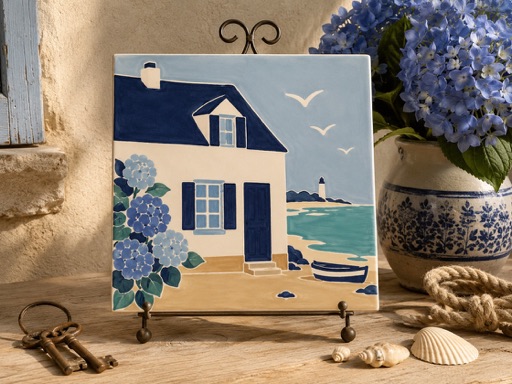
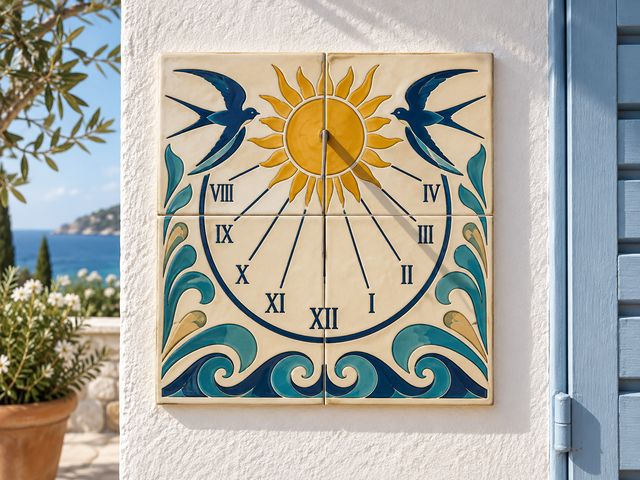
lake house sign
The Lake House Sign: Hand-Painted Ceramic for a Second Home
A hand-painted ceramic lake house sign, 269 € to the US, shipping and import duties included, nothing to pay on arrival. Free mock-up before you order.
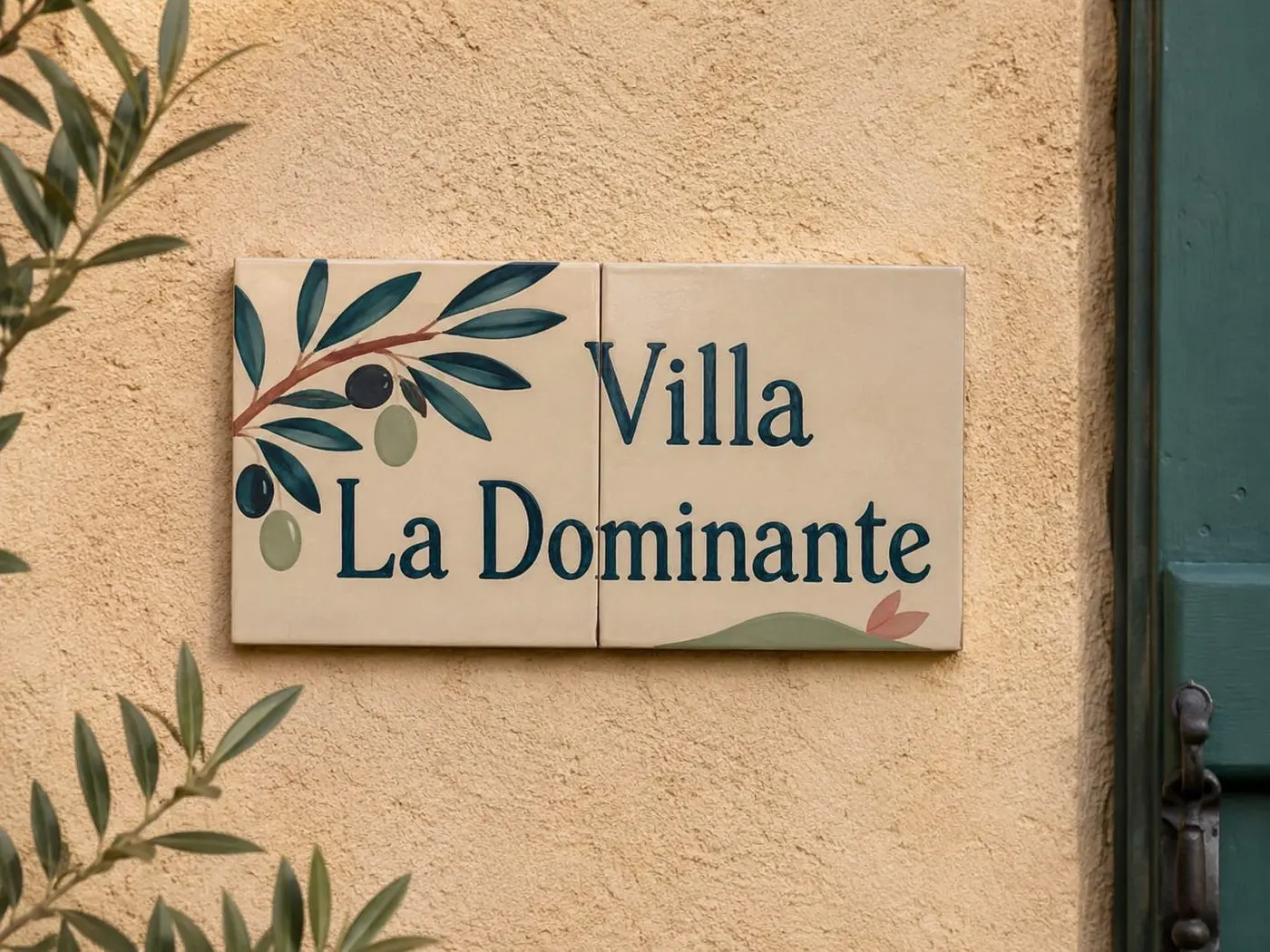
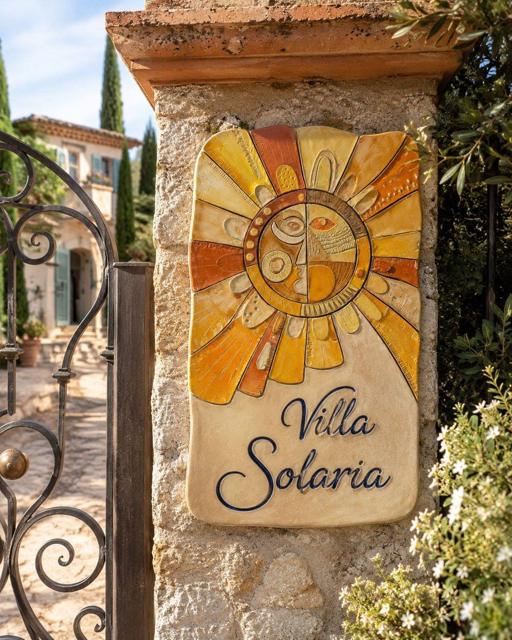
A lake house sign is not quite the same object as a house sign, and the difference is cultural rather than decorative. We are Tout en céramique, a two person studio in Le Vésinet just west of Paris, where Laurence Brecher paints every piece in enamel by hand and fires it in the kiln. The hand-painted ceramic name sign we make for an American second home is 269 €, delivered to your door with shipping and import duties included. This page is about why that particular piece belongs on that particular house.
The one house Americans do name
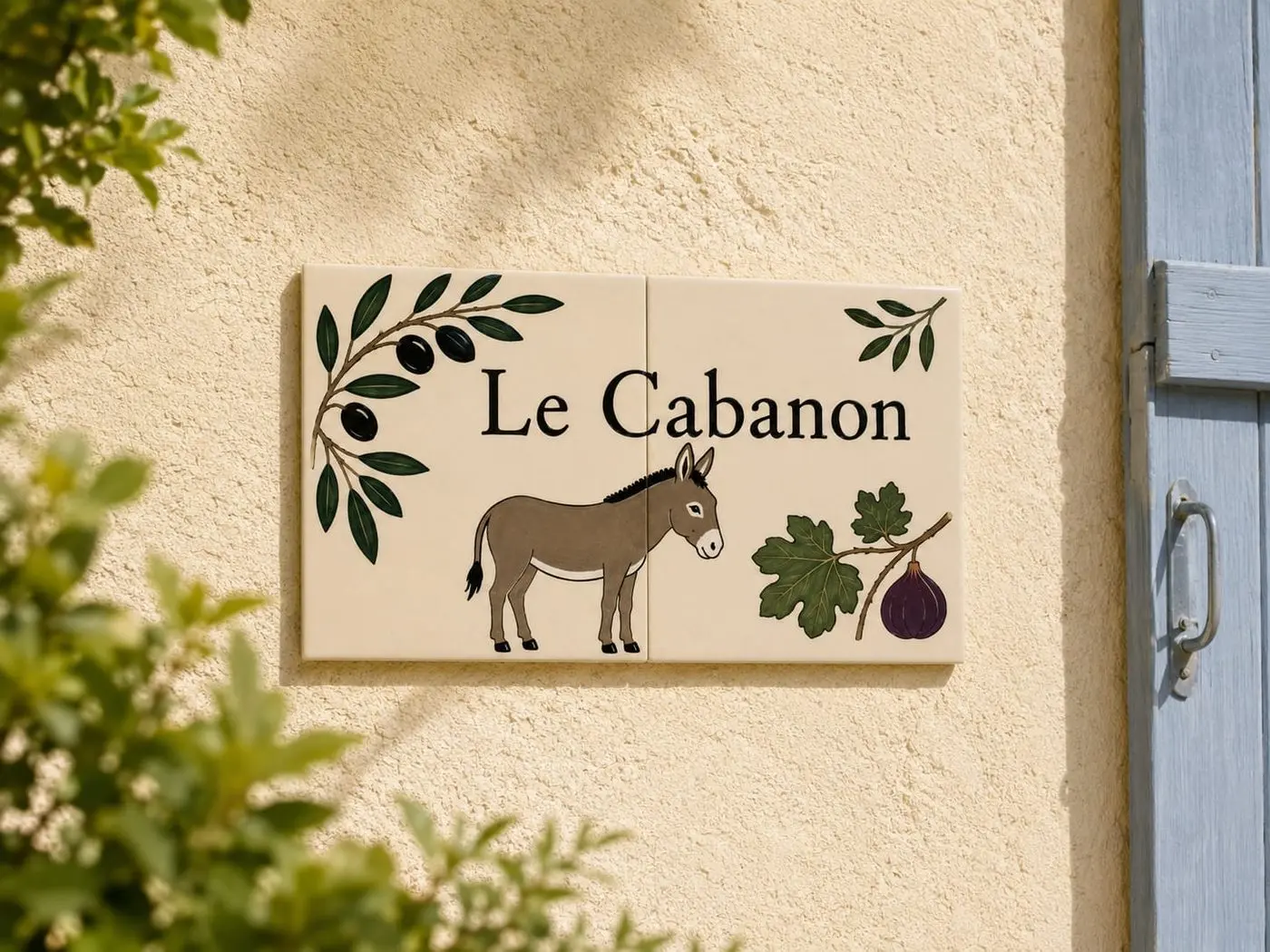
In Britain and Ireland, houses have names as a matter of course. The name goes on the gate, and it goes into the postal address itself: write the name of the house, the village and the postcode, and the letter arrives. That practice never crossed the Atlantic. American homes are numbered rather than named, and a name on a suburban front door reads as a flourish instead of an address.
There is one exception. The house Americans name is the second home. The lake house, the cabin, the beach house, the camp in the woods: those places get names, and the name sticks. A primary address is where the mail goes. The second home is where the summers happen. That is a different kind of place, and it is the kind that earns a sign.
So this is not a page about naming your house. It is a page about the place you drive back to.
Cabin sign, beach house sign, camp sign: one piece, four words

The word changes with the geography. Not much else does.
- A cabin sign usually ends up on wood or log, by a door that gets pushed open with an armful of firewood.
- A beach house sign tends to pull the palette toward blue, sand and white, and the motif toward water.
- A lake house sign sits between the two, often on a painted or shingled facade, and often facing the water rather than the road.
- Camp is the Northeastern word for the same thing, and it is worth keeping if that is what your family has always called it.
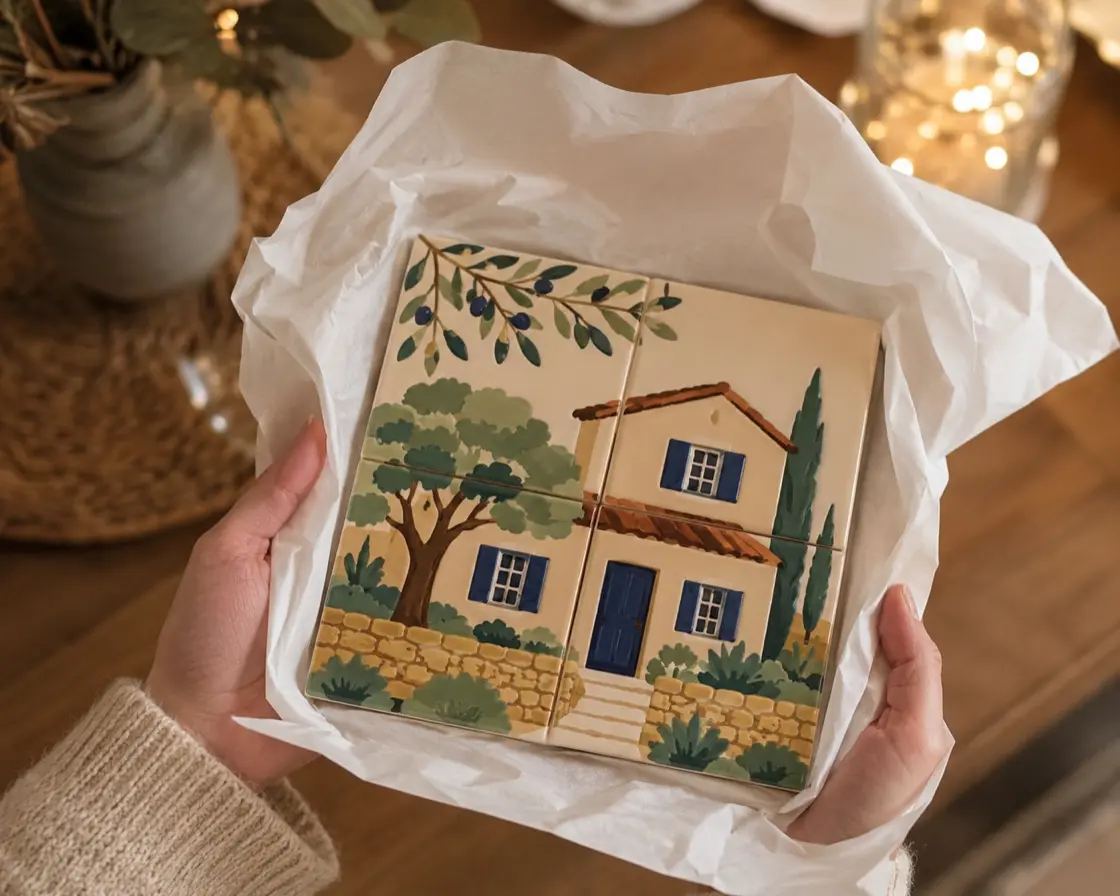
If none of those words fit, vacation home sign is the neutral one, and the object is identical: a flat earthenware tile, painted and fired. What changes is the lettering, the palette and the motif, not the format.
What actually goes on the tile
Four things can go on, in any combination.
The name of the house. Whatever the family already calls it. You almost never have to invent one, because the name already exists.
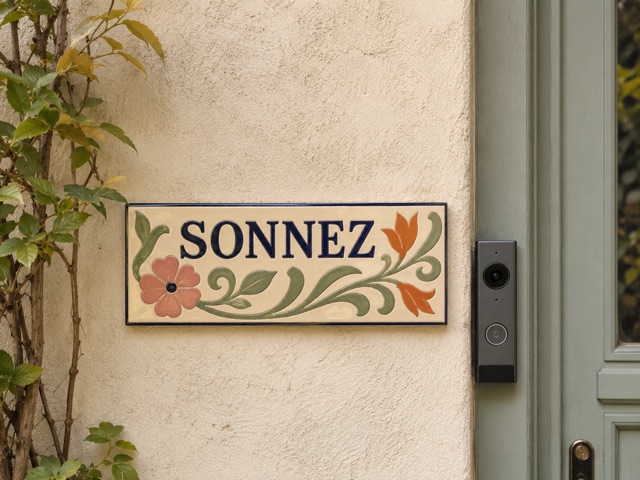
The family name. A personalized family name sign is the other classic form, and it does a different job: it says who the place belongs to rather than what the place is called. It suits a house that has no name and does not want one.
The year. The year the house was built, or the year it came into the family. One small line of numerals under the name, and the sign is telling you something.
A motif taken from the place itself. A pine. A loon. A sailboat. A wave. The ridge line of the mountain you look at from the porch. One drawing, taken from what is actually outside the door rather than off a clip art menu. The motif is decided with you on the mock-up, which is the point of doing this by hand.
Painted and fired, not printed
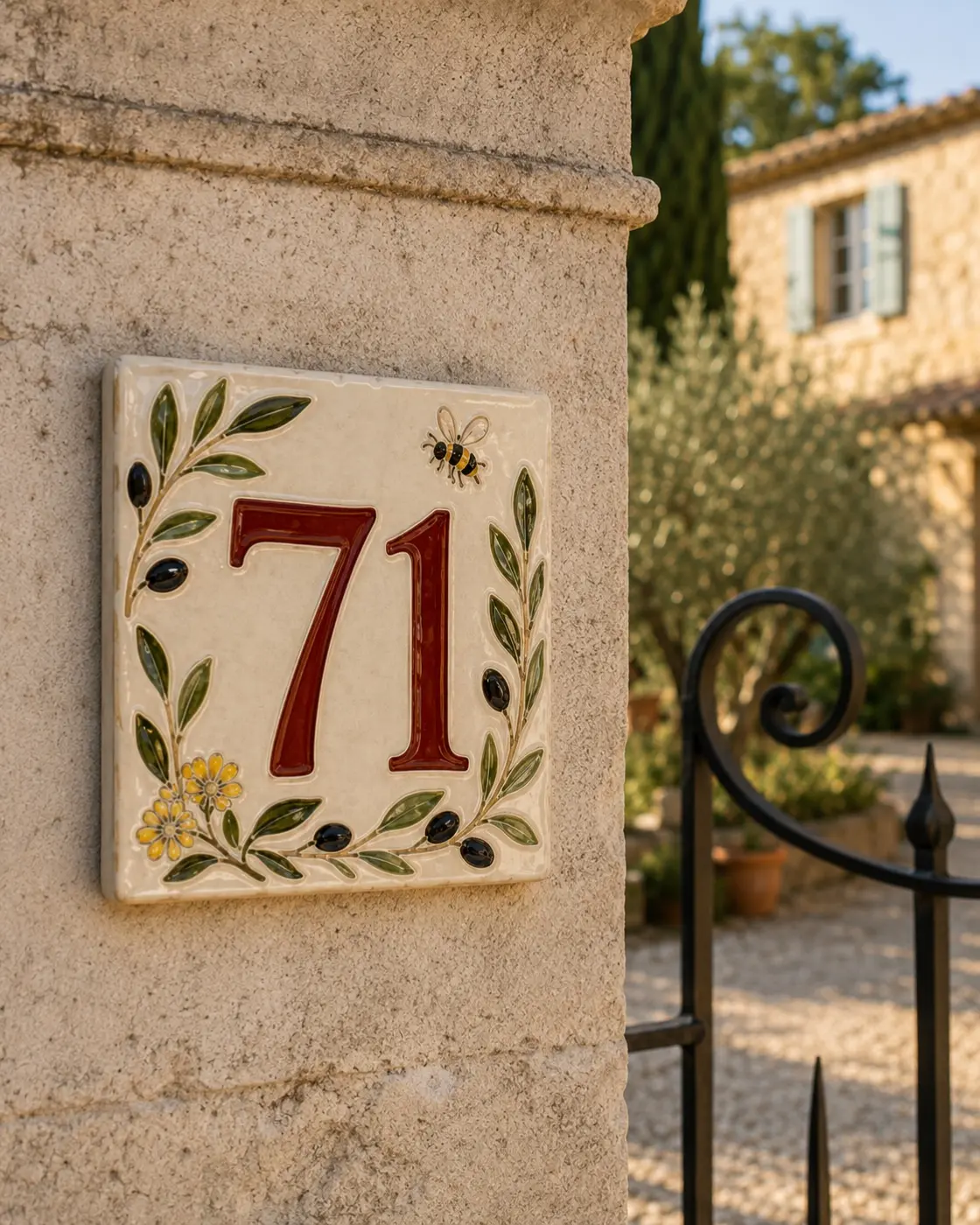
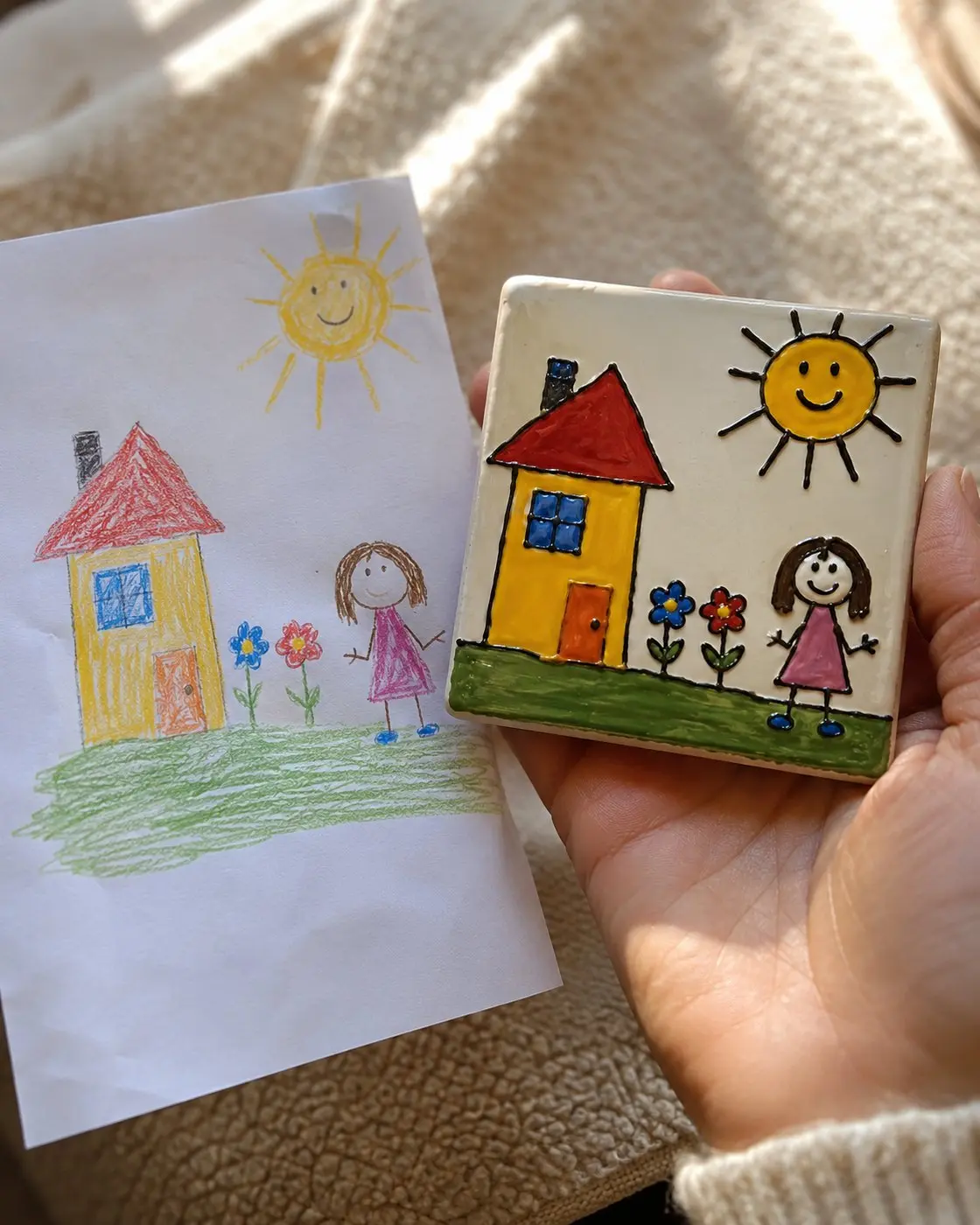
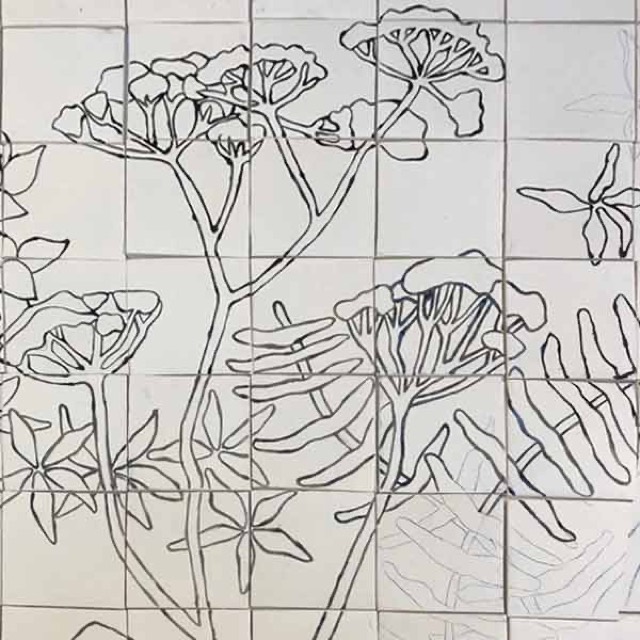
A printed sign is ink laid onto a board after the board was made. An engraved sign is letters cut into a surface and then filled. Our tile is neither. The color is enamel, brushed on by hand, and the tile then goes into the kiln, where that color vitrifies into the glaze: a thin layer of colored glass fused to the clay. The drawing ends up in the surface rather than on top of it. There is no printer at any stage and no file sent to a machine.
No two tiles come out identical. Laurence paints them one at a time, so the weight of the lettering and the small irregularities of the brush belong to yours alone.
What we will not do is tell you how it will look in ten years on your particular wall. That is not ours to promise.
The mock-up comes before the money
You send us the wording you have in mind, plus a photo of the door or the facade if you have one. We send back a free mock-up: the real layout, the lettering, the colors, the motif drawn out at the right size. You ask for changes and we make them: move a word, change a blue, drop the year, swap the pine for a sailboat. Nothing goes into the kiln and nothing is charged until you say yes to what you are looking at.
Write to us through the request form and we reply usually within the hour during Paris working hours.
What it costs, all the way to your door

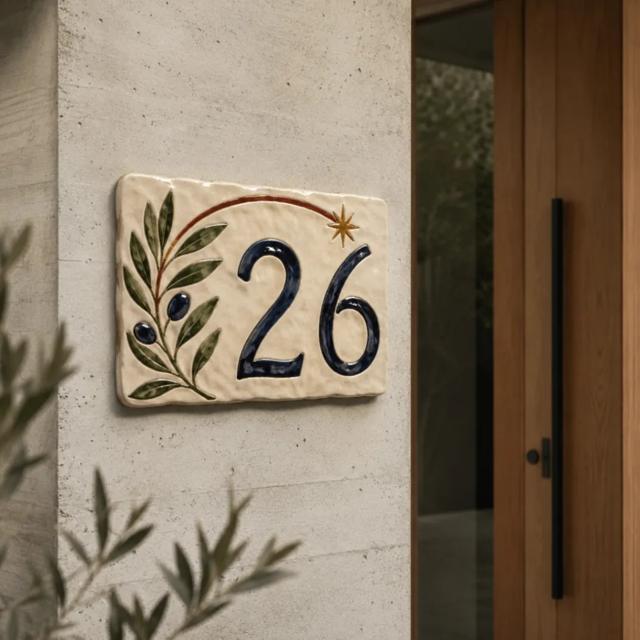
The hand-painted name sign is 269 €. If you want the number as well, a house number on a single tile is 179 €, painted in the same palette and the same lettering so the two read as one set by the door.
Both of those numbers include the flight across the Atlantic and the American import duties. There is nothing to pay on arrival: no customs invoice, no fee at the door, no second payment after the first.
That is worth spelling out, because the rules changed. Since August 29, 2025, the United States charges import duty on incoming parcels from the very first dollar of value, and the old exemption for parcels under 800 $ no longer exists. A parcel sent from Europe now normally arrives with a bill attached to it, which is a miserable way to receive something you waited weeks for. We decided to carry that cost on our side rather than let it land on yours.
We are not the cheapest sign you can buy, and we are not going to pretend otherwise. What you are paying for is a piece painted by a named person, one at a time, and the fact that you see it before you pay for it. Prices are in euros and we do not print a dollar figure next to them, because we would be inventing an exchange rate: your card issuer converts at the rate of the day.
How long it takes
Each tile is painted by hand and then fired, so allow a few weeks in the studio, and then roughly a week in transit to the United States. The mock-up stage costs nothing and holds nothing up, so start the conversation early rather than the week before you need it. If the sign is meant to be up for opening weekend, count backward from that weekend.
The same idea, in the mountains

The named second home is not only an American habit. In the Alps it goes back a long way, and the sign over a chalet door is part of the architecture. If your place is in the mountains rather than on the water, the conventions and the motifs differ enough to deserve their own page: see the ceramic chalet name sign.
Tell us what you call it
You do not need a finished idea, and you certainly do not need a design. Tell us the name the family already uses, what you look at from the porch, and roughly what the front of the house looks like. We will paint it on screen first and show it to you, before you spend anything.
To go further, discover all our ideas: Home accessories.